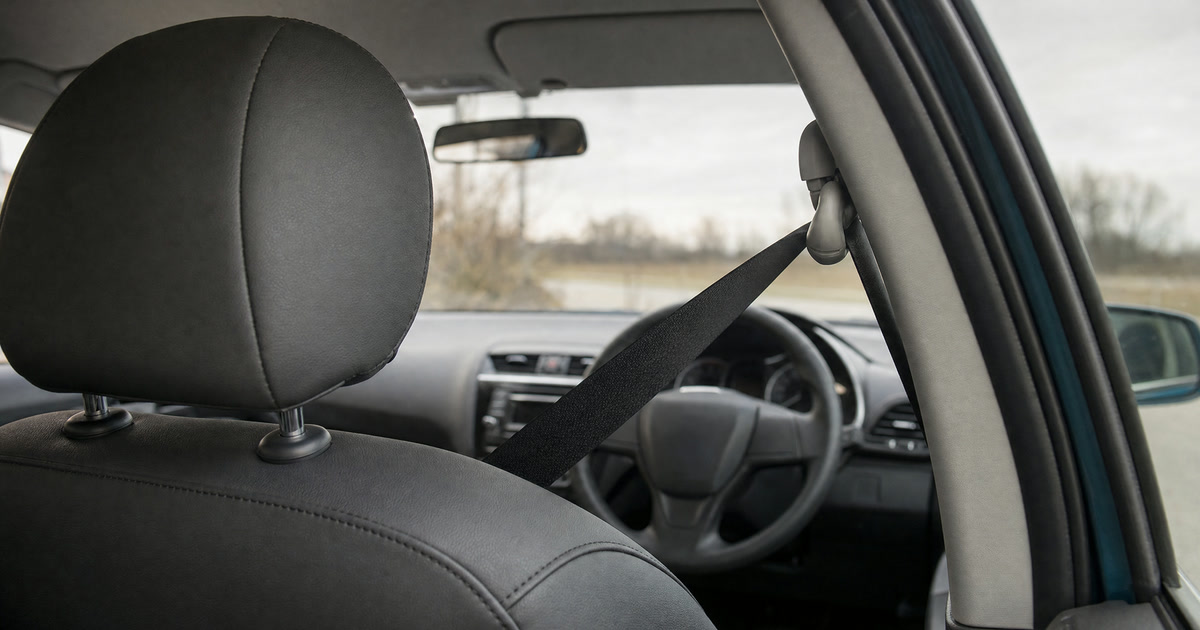
You were stopped in traffic on US-50 or crawling down Collington Road when the car behind you didn't stop. Now your neck is stiff, your head aches at the base of your skull, and someone has told you to "get checked out." You have never been to a chiropractor after a crash. You don't know what happens in the room, what it costs your claim, or whether it will hurt.
This guide walks through exactly what a car accident chiropractor in Bowie, MD does at a first visit, so the appointment itself holds no surprises.
What a Car Accident Chiropractor in Bowie, MD Actually Does at the First Visit
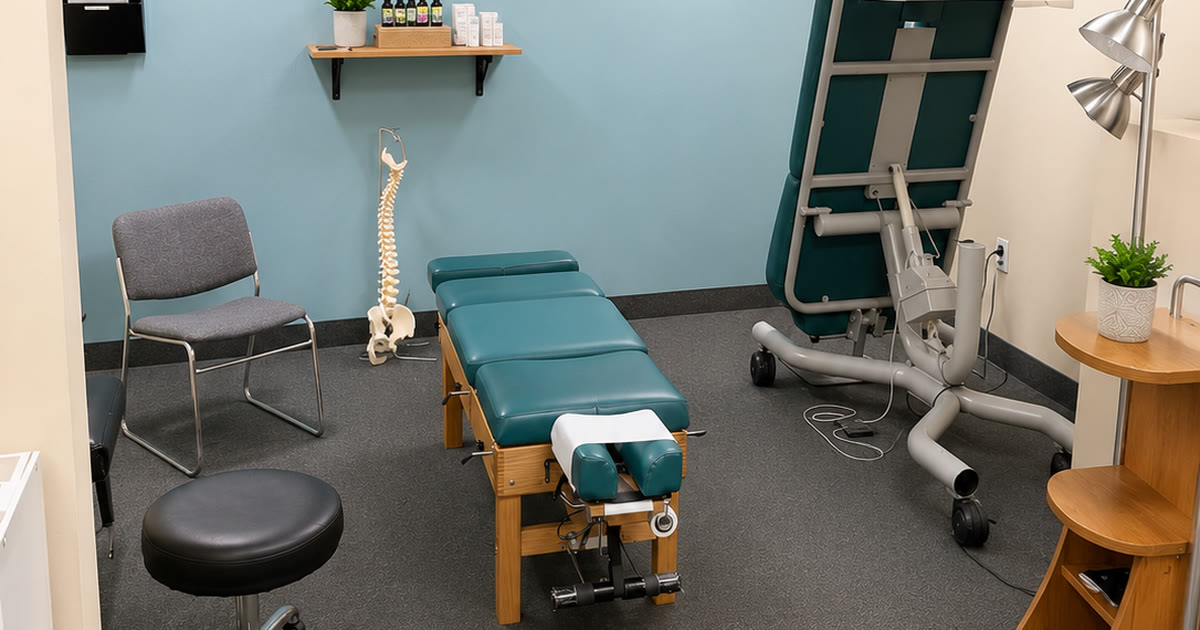
The first visit after a crash is mostly assessment, not treatment. The goal is to learn what happened to your body, rule out anything that needs emergency or specialist care, and set a baseline you can measure progress against.
Expect the visit to include five parts: intake paperwork, a crash history, a red-flag screen, a hands-on examination, and a plain-language conversation about what we found and what comes next. Most people are surprised by how much of it is talking and testing rather than adjusting.
Why Symptoms Often Show Up Late
Mayo Clinic notes that symptoms of whiplash most often start within days of the injury. Its list of symptoms is worth knowing before you come in:
- Neck pain and stiffness, and pain that gets worse with neck movement
- Loss of range of motion in the neck
- Headaches, most often starting at the base of the skull
- Tenderness or pain in the shoulder, upper back, or arms
- Tingling or numbness in the arms
- Tiredness and dizziness
Some people also report blurred vision, ringing in the ears, trouble sleeping, trouble focusing, or memory problems. Mayo's advice is to see a healthcare professional promptly after a car accident if you have neck pain or other whiplash symptoms, in part to rule out broken bones or other damage.
If you feel fine right now, that is not a reason to skip an evaluation. We cover that question in depth in no pain after a car accident: should I see a doctor? and delayed whiplash symptoms after a car accident.
Step 1: Intake and Your Crash History
Bring your insurance information and the claim number if you have one, plus a list of any medications. If you went to the ER or urgent care, bring your discharge paperwork and any imaging reports.
Then we talk through the crash itself. Details matter because different impacts load the body differently:
- Which direction you were hit from (rear, side, front)
- Whether you saw it coming, and which way your head was turned
- Whether your headrest was up and your seat belt was on
- Whether an airbag deployed
- Where your symptoms started, how they have changed, and what makes them better or worse
- Any earlier neck, back, or head problems, so we can tell old from new
There are no wrong answers here, and you don't need to remember everything. Approximate is fine.
Step 2: The Red-Flag Screen Comes First
Chiropractic care is not a substitute for emergency evaluation. Before anything else, we screen for signs that you need an emergency department or another specialist. Go to the ER or call 911 instead of coming to us if you have:
- Loss of consciousness, confusion, repeated vomiting, or worsening drowsiness
- A severe or rapidly worsening headache, or one unlike any you have had before
- Vision changes, double vision, or slurred speech
- Weakness in an arm or leg, or a change in grip strength
- Loss of bowel or bladder control
- Severe neck pain with any sense that your neck is unstable
- Chest pain, trouble breathing, or abdominal pain
If the screen turns up something concerning, the honest outcome of a first visit is a referral, not an adjustment. That is a normal result, not a failure.
Step 3: The Physical Examination
The hands-on exam is where we look for what is mechanical and what is not. It typically includes:
- Posture and movement: how you stand, sit, and move your neck, shoulders, and back
- Range of motion: how far your neck turns, tilts, and bends in each direction, and where it stops or hurts
- Palpation: gentle touch along the spine and surrounding muscles to find tender, tight, or restricted areas
- Neurological screening: reflexes, sensation, and strength in your arms and legs
- Orthopedic tests: specific movements that help sort out which structures are irritated
If the findings point toward a fracture, a disc problem with nerve involvement, or a possible concussion, we refer you for imaging or medical evaluation before any hands-on care.
Step 4: Imaging, Only When It Is Warranted
Not everyone needs an X-ray or MRI. Whether imaging is appropriate depends on your history, your exam findings, and whether any red flags are present. When we think it is needed, we refer you for it or review what the ER already took. The point of imaging is to rule out serious injury, not to collect pictures.
Step 5: Your Plan, Explained in Plain Language
After the exam, we explain what we found in terms you can follow, then discuss a short, defined plan with a point at which we re-check how you are doing.
It helps to know what the research says about care for recent neck pain after a crash. The Ontario Protocol for Traffic Injury Management (OPTIMa) guideline, published in the European Spine Journal in 2016, recommends educating and reassuring patients that most mild-to-moderate neck pain is typically benign and self-limited. For recent-onset cases it says clinicians may consider range-of-motion exercise combined with education, or multimodal care that pairs exercise with manipulation or mobilization.
That is why our approach is restrained: gentle movement, education, and, when your exam supports it, chiropractic adjustments or mobilization as one part of care. We aim to support your body's natural recovery, and we reassess at each visit rather than locking you into a long schedule. For a deeper look at the evidence, see should I see a chiropractor after a rear-end collision?
Will It Hurt?
Most people are relieved. The exam involves movement and touch, and some tender spots will be tender when we find them. We stay within what you can tolerate, and you can tell us to stop at any time. If you are very sore, we adjust the plan, and techniques can be modified or low-force.
How a Visit Fits With Maryland Insurance
This is general information, not legal advice. Questions about your specific policy or claim belong with your insurer or a licensed Maryland attorney.
The Maryland Insurance Administration's consumer auto insurance guide explains that Personal Injury Protection (PIP) is available with at least $2,500 in coverage, reimburses reasonable and necessary medical expenses resulting from an auto accident, and that this reimbursement "will be made regardless of who caused the accident." It also warns that PIP coverage can be denied if claims are not properly and timely filed, and advises contacting your insurer right after an accident and requesting PIP forms. Whether you waived or limited PIP is something to confirm on your declarations page.
For more, read Maryland PIP insurance and chiropractic care.
We document what we find and what we do. We do not value claims, predict settlements, or give legal advice. Your first-visit notes simply create a dated baseline that records your symptoms and range of motion when you first came in.
How Soon Should You Come In?
Sooner is generally easier than later, because the crash details are fresh and your baseline is clear. Our guide to how long after a car accident you should see a chiropractor covers timing, and what to do after a car accident in Bowie, MD covers the first 48 hours.
If something is lingering, our conditions page and services page explain what we see in the office. For stubborn tendon or soft-tissue pain that has not responded to standard care, StemWave acoustic wave therapy is another option to discuss. Your first StemWave session is $50.
Frequently Asked Questions
What should I bring to my first visit with a car accident chiropractor?
Bring your photo ID, insurance cards, the claim number and adjuster's contact if you have them, a medication list, and any ER, urgent care, or imaging paperwork. If you don't have everything, come anyway and we will work with what you have.
How long is the first appointment?
Plan for extra time compared with a routine visit, since it includes paperwork, history, examination, and a review of findings. We will tell you what to expect when you schedule.
Do I need a referral to see a chiropractor after a car accident?
You can schedule directly with our office. If your insurer, attorney, or another provider has specific paperwork requirements, ask them, and we can provide records to whomever you direct.
Will I get adjusted at the first visit?
Not necessarily. The first visit is primarily evaluation. If your exam shows that care is appropriate and safe, we discuss a plan and what to begin with. If anything raises a concern, we refer you first.
What if I wasn't at fault?
Fault does not decide whether you can be evaluated. According to the Maryland Insurance Administration, PIP reimbursement is made regardless of who caused the accident, though your specific coverage depends on your policy.
Do I need to wait for my pain to get worse?
No. Mayo Clinic advises seeing a healthcare professional promptly after a car accident if you have neck pain or other whiplash symptoms. An early exam also gives you a clear baseline.
Is a first visit right if the crash happened weeks ago?
Yes. Earlier is easier, but lingering stiffness, headaches, or numbness weeks out are exactly the kind of thing worth having examined.
Car Accident Care Across Bowie and Prince George's County
Total Wellness Chiropractic is on Laurel Bowie Road (MD-197) in Bowie. We see patients who commute along US-50, Collington Road, US-301, Annapolis Road (MD-450), MD-3, and Route 214, and who live in Crofton, Mitchellville, Glenn Dale, Upper Marlboro, Lanham, and Largo. If you were in a crash anywhere in Prince George's County and something in your neck, back, or head doesn't feel right, we are here to help you understand what is going on.
Book an appointment online at wherethehealingbegins.com or call 301-352-3454.
Total Wellness Chiropractic 6000 Laurel Bowie Road, Suite 202 Bowie, MD 20715 (301) 352-3454 wherethehealingbegins.com
This article is for educational purposes only and is not medical or legal advice. It does not create a doctor-patient relationship and is not a substitute for an in-person evaluation by a qualified healthcare provider. If you are experiencing a medical emergency, call 911. For questions about insurance coverage or a personal injury claim, consult your insurer or a licensed Maryland attorney. Individual results may vary.