If you've spent any time researching non-surgical body contouring, you've run into the same two words over and over: CoolSculpting and, more recently, red light body contouring, which is what we offer here in Bowie as InvisaRED.
Both promise something similar on the surface: address stubborn areas that diet and exercise haven't touched, without surgery. But they are not variations on the same idea. One freezes fat cells until they die. The other prompts fat cells to release what they're storing so your body can burn it as fuel. They feel completely different during a session, they recover completely differently afterward, and only one of them does anything for your metabolism.
I get asked to compare them almost every week, so here is the full breakdown: how each one works, what a session feels like, who each suits, and why most of my patients choose the light.
The short version
| InvisaRED (red light) | CoolSculpting (cryolipolysis) | |
|---|---|---|
| Mechanism | Red and near-infrared light prompts fat cells to release stored fat | Controlled cooling of a suctioned fold of tissue |
| Fat cell effect | Cells shrink; nothing destroyed | Cells killed; body clears dead tissue over months |
| Metabolic effect | Manufacturer reports up to ~2,000 calories per session; metabolism elevated up to 72 hours | None reported |
| Sensation | Warm, painless; most patients read or nap | Intense cold, pulling and numbness for the first several minutes |
| Session length | About 20–30 minutes | Roughly 35–60 minutes per applicator |
| Typical course | A series of sessions over several weeks | Often 1–2 rounds per area, spaced months apart |
| Areas | Belly, flanks, thighs, arms, back, chin; anywhere a pad can rest | Pinchable pockets the applicator can grip |
| Downtime | None | None required, but bruising, swelling, numbness and tingling are common afterward |
| Timeline to visible change | Many patients notice a difference within the first few sessions | Gradual over roughly 1–3 months |
| Rare complication | None reported in the published trials | Paradoxical adipose hyperplasia (area grows); some estimates around 1 in 50 |
| Regulatory status | FDA-cleared for non-invasive circumference reduction | FDA-cleared for fat-layer reduction in specific treatment areas |
| Cost to start | $59 first session | Typically $600–$1,500+ per applicator |
Individual results may vary with either technology.
How CoolSculpting works
CoolSculpting is the best-known brand name for a process called cryolipolysis, which grew out of research at Massachusetts General Hospital. The underlying observation was simple: fat cells are more vulnerable to cold than the skin, nerves and blood vessels around them.
An applicator draws a fold of tissue into a cup and cools it to a precisely controlled temperature. Fat cells in that fold are damaged by the cold and gradually broken down and cleared by the body over the following weeks and months.
That mechanism has three consequences worth understanding before you book anything:
It only treats what it can grip. The applicator works on a discrete, pinchable pocket: a lower abdominal roll, flanks, a double chin. Broader, flatter or firmer areas are a poor fit.
The sensation is real. Most people describe intense cold and a strong pulling feeling for the first five to ten minutes, after which the area numbs. Afterward, bruising, swelling, tenderness, numbness and odd tingling are common and can linger for days or occasionally weeks.
There is a rare but serious complication. Paradoxical adipose hyperplasia is when the treated area enlarges rather than shrinks, and it typically requires surgical correction. It is uncommon, but it is permanent without surgery.
CoolSculpting works for the right anatomy. It is also cold, uncomfortable, slow to show results, and carries that rare but serious complication. You can read the published research on cryolipolysis on PubMed.
How InvisaRED works
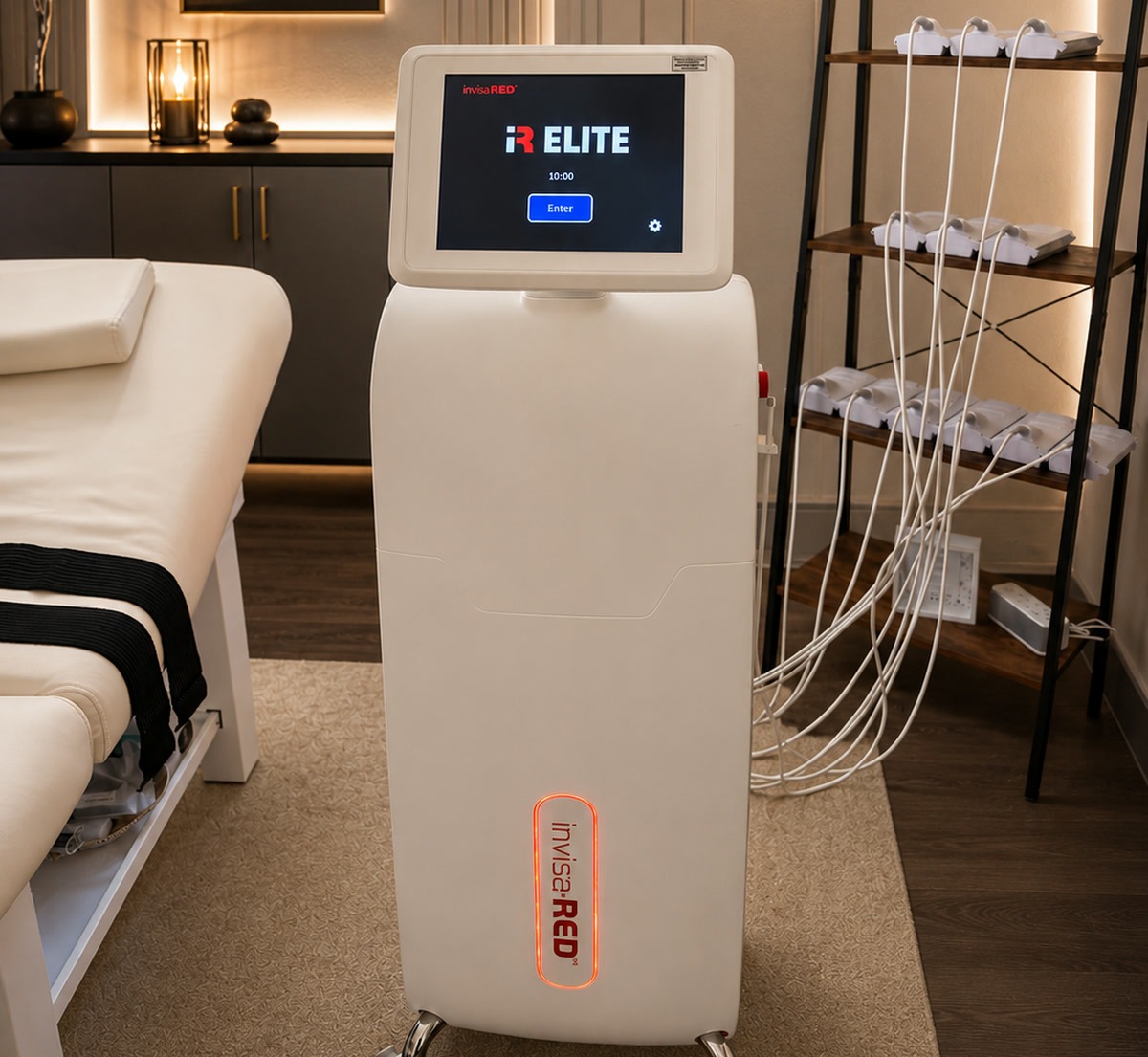
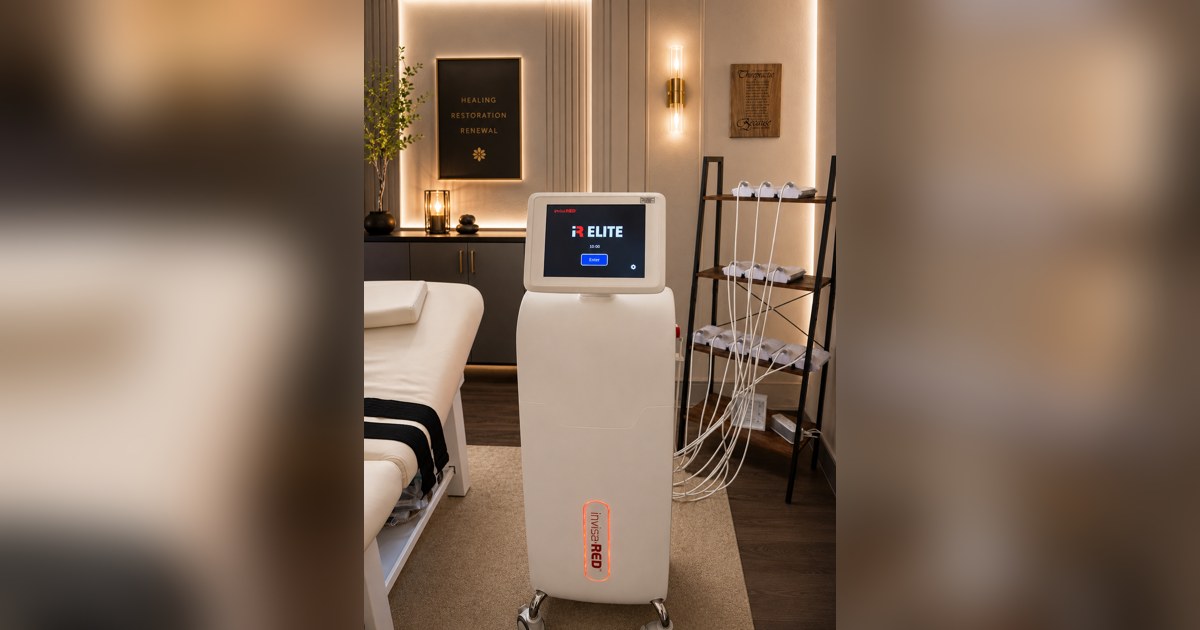
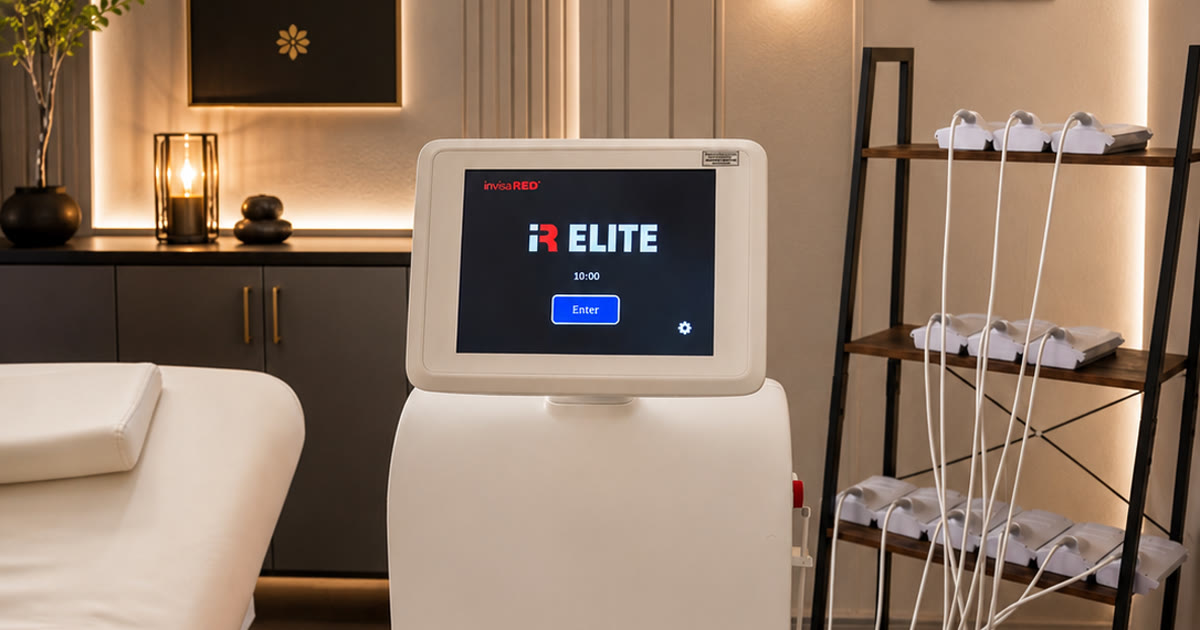
InvisaRED takes a completely different route. Instead of destroying fat cells with cold, it uses specific wavelengths of red and near-infrared light delivered through flexible pads laid against the skin.
Here is what happens during a session. The pads deliver light at wavelengths your fat cells absorb. That light triggers the fat cell membrane to open temporary pores, and the cell releases its stored contents, triglycerides, free fatty acids and glycerol, into the space around it. The fat cell shrinks. Your lymphatic system picks up what was released and moves it into circulation, where your body burns it as fuel. This is the same pathway your body uses when you exercise. The difference is that the light does the signaling for you, in the exact spots you want to shrink, while you lie down for 20 minutes. The original randomized, sham-controlled trial by Jackson and colleagues documented these transitory pores in fat cell membranes following 635 nm light, with the treatment group losing 3.51 combined inches versus 0.68 in the sham group.
Because nothing is destroyed, there is no inflammation and no dead tissue. The fat your cells release goes into circulation and your body burns it, which is why InvisaRED has a metabolic effect CoolSculpting simply does not have.
That is where the energy math gets interesting. InvisaRED reports that a single session can trigger a metabolic response equivalent to burning up to roughly 2,000 calories, and that your metabolism stays elevated for up to 72 hours afterward. That is why we tell patients to take a walk after a session and stay hydrated: you are giving your body the signal to use what was just released as fuel. Done one to three times a week over a series, that is a meaningful push toward both inch loss and weight loss. Individual results may vary.
If you want to read the research yourself, the published work on low-level laser therapy for body contouring is indexed on PubMed, and I walk through it in how red light body contouring works. Both categories of device are regulated as medical devices by the FDA.
What a session actually feels like
This is the question I get most, and it's the biggest practical difference between the two.
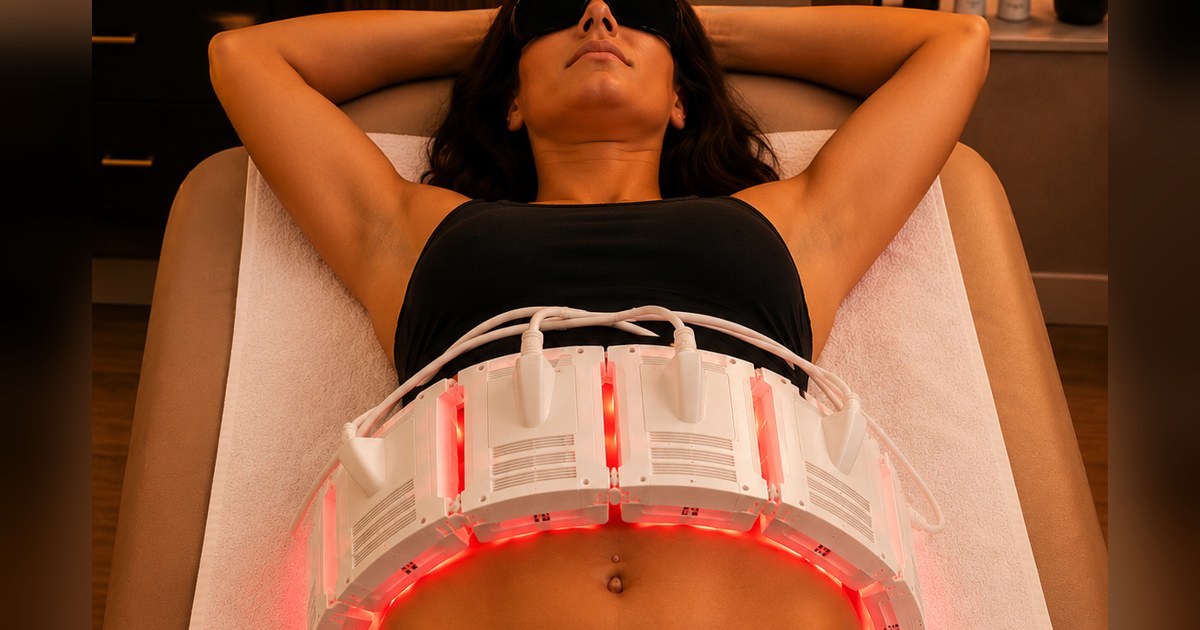
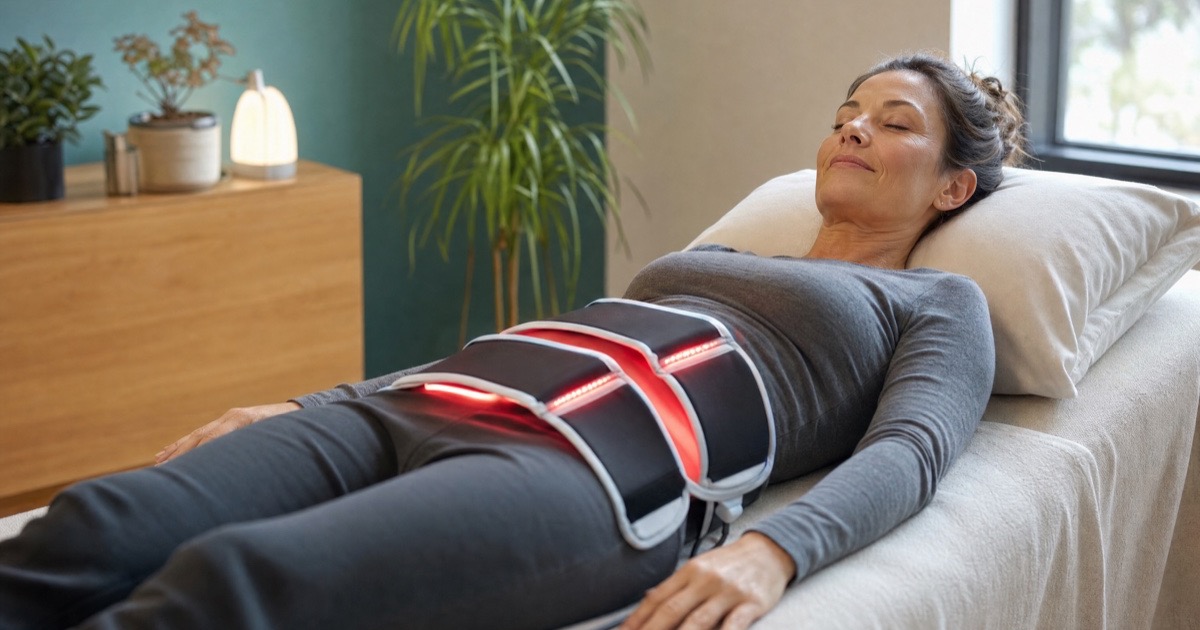
An InvisaRED session at our Bowie office runs about 20 to 30 minutes. You stay fully clothed in comfortable layers or change into something light. Flexible pads are positioned over the areas we're working on and secured. Then the lights come on and you rest. The pads are gently warm. There is no pinching, no cold, no pressure. Most people use the time to catch up on their phone or simply close their eyes. When the timer ends, the pads come off and you go back to your day, with no marks, no soreness and no recovery window.
A CoolSculpting session is a more involved experience. A gel pad protects the skin, the applicator suctions the tissue, and the cooling begins. The first stretch is uncomfortable, cold and pulling, before the area goes numb. Afterward, the practitioner typically massages the treated area, which most patients describe as the least pleasant part. You leave with the area often red, swollen and numb.
Neither is a procedure you need to take a day off for. But one of them you genuinely forget about by dinner, and the other one you don't.
Which one makes sense for whom
Cryolipolysis tends to suit someone with one or two discrete, pinchable pockets of fat, who is comfortable with a more intense session and some days of after-effects, and who is willing to wait two to three months to see what happened.
InvisaRED tends to suit someone who wants to target several areas or broader areas, who wants zero discomfort and zero after-effects, who wants to see progress within weeks rather than months, who wants the metabolic push alongside the inch loss, or who simply can't tolerate the cold-and-suction experience.
Only one of them supports weight loss. CoolSculpting kills a fixed number of cells in one pocket and does nothing for your metabolism. InvisaRED releases stored fat your body then burns, with a metabolic effect that continues for up to 72 hours. That is why we run InvisaRED as part of our doctor-supervised weight loss program, and why patients who want both a smaller waist and a lower number on the scale choose the light. I explain the inches-first pattern in detail in how InvisaRED helps you lose inches and pounds.
Some of our best results come from combining InvisaRED with that program. The medical side helps regulate appetite and supports your metabolism across the whole body. InvisaRED targets the specific areas you want to shrink and gives your metabolism an extra push after every session. Patients tell us the combination keeps them motivated, because they see their waistline changing while the scale catches up. Ask about it at your first visit.
Frequently asked questions
Does InvisaRED hurt?
No. The pads are warm and rest against the skin. There is no suction, no cold and no needles. Most patients find it relaxing enough that falling asleep is common.
How many sessions will I need?
Most plans run six to twelve sessions over four to six weeks, depending on the areas you are treating and your starting measurements. We measure at your first visit and build the plan from your numbers. See how many red light body contouring sessions for the research behind that range. Individual results may vary.
Is there any downtime?
None. You can return to work, exercise or anything else immediately. In fact, movement after a session is encouraged, because that is how your body burns the fat the light just released.
Can I do this if I've had CoolSculpting before?
Generally yes, though we'd want to know when and where. Bring the details to your first visit.
Will the results last?
Yes, as long as you maintain them. With CoolSculpting the remaining cells can still grow; with InvisaRED the shrunken cells stay small as long as you keep moving and eating reasonably. Many patients book a maintenance session once or twice a month.
What does it cost to start?
Your first session is $59, including consultation, measurements and a full treatment. CoolSculpting typically starts at several hundred dollars per applicator.
The bottom line
CoolSculpting freezes a pocket of fat and asks you to wait three months to see what happened, with a cold, uncomfortable session and a rare chance of the area growing instead. InvisaRED shrinks fat cells across any area we can reach with a pad, supports your metabolism for days afterward, feels like a warm nap, costs $59 to try, and fits into a lunch hour. For most of the people who walk into my office, that is not a close call.
Ready to See the Inches Come Off?
Your first InvisaRED session is $59, and it includes your consultation, baseline measurements and a full treatment, so you can feel the difference before you commit to a series. Most people are in and out in about an hour, and back to their day with nothing to recover from.
Book online at wherethehealingbegins.com or call (301) 352-3454. We're at 6000 Laurel Bowie Road, Suite 202, Bowie, MD 20715. You can read more about what we offer on our services page, and if cost is a factor, our financing options may help.
This article is for educational purposes only and is not medical advice. InvisaRED is an FDA-cleared, non-invasive red light body contouring system used at Total Wellness Chiropractic as part of our weight loss and body contouring program. It is not intended to diagnose, treat, cure, or prevent any disease. CoolSculpting is a trademark of its respective owner and is referenced for comparison only. The clinical trials cited studied 635 nm low-level laser devices; calorie and metabolism figures are reported by the manufacturer. Individual results may vary. Talk with your physician before beginning any new program, particularly if you are pregnant, have a history of cancer, take photosensitizing medications, or have an implanted medical device.